Thursday, 11 June 2015

30 Days of Wild - Day 10 - Patch


Having a patch is where it all began for me, starting from the bottom up, learning the basics, learning the patterns of annual cycles and seasons, and the idea of migration. It gives you a sense of belonging, a second home, and personal relationships with its inhabitants. There's no greater tool for learning, appreciation, or the development of a passion than a patch.

The excitement of seeing a new species, or behaviour never ceases on a patch, and it always seems to know when to deliver, reminding you of that spark, where it all began.

My first Holywell Long-Eared Owl!

30 Days of wild - Day 9 - Subtle pieces of magic...


30 Days of Wild - Day 8 - The Skylark


At this time of year, the Northumbrian hills, meadows, grassland, farmland and dunes are full of song. One song dominates all, usually heard from high above, at unbelievable heights the Skylark makes itself known. 


The rolls and harrows lie at rest beside
The battered road; and spreading far and wide
Above the russet clods, the corn is seen
Sprouting its spiry points of tender green,
Where squats the hare, to terrors wide awake,
Like some brown clod the harrows failed to break.
Opening their golden caskets to the sun,
The buttercups make schoolboys eager run,
To see who shall be first to pluck the prize—
Up from their hurry, see, the skylark flies,
And o'er her half-formed nest, with happy wings
Winnows the air, till in the cloud she sings,
Then hangs a dust-spot in the sunny skies,
And drops, and drops, till in her nest she lies,
Which they unheeded passed—not dreaming then
That birds which flew so high would drop agen
To nests upon the ground, which anything
May come at to destroy. Had they the wing
Like such a bird, themselves would be too proud,
And build on nothing but a passing cloud!
As free from danger as the heavens are free
From pain and toil, there would they build and be,
And sail about the world to scenes unheard
Of and unseen—Oh, were they but a bird!
So think they, while they listen to its song,
And smile and fancy and so pass along;
While its low nest, moist with the dews of morn,
Lies safely, with the leveret, in the corn.

The Skylark by John Clare


30 Days of Wild - Day 7 - Twitch


Twitching is always fraught with opinions and personalities but it's a brilliant way to observe the movements of none UK species. It allows you to see the global connections some of these species travel in, and how far out of their way they can get. Tracking the individual journey of certain species, through the use of modern technology and personal observations by birdwatchers all over the UK, Europe and the World builds the possibilities of some of the best travelling stories. 

Spoonbills, sleeping at Cresswell Pond.

Wednesday, 10 June 2015

30 Days of Wild - Day 5 & 6 - Immerse yourself...


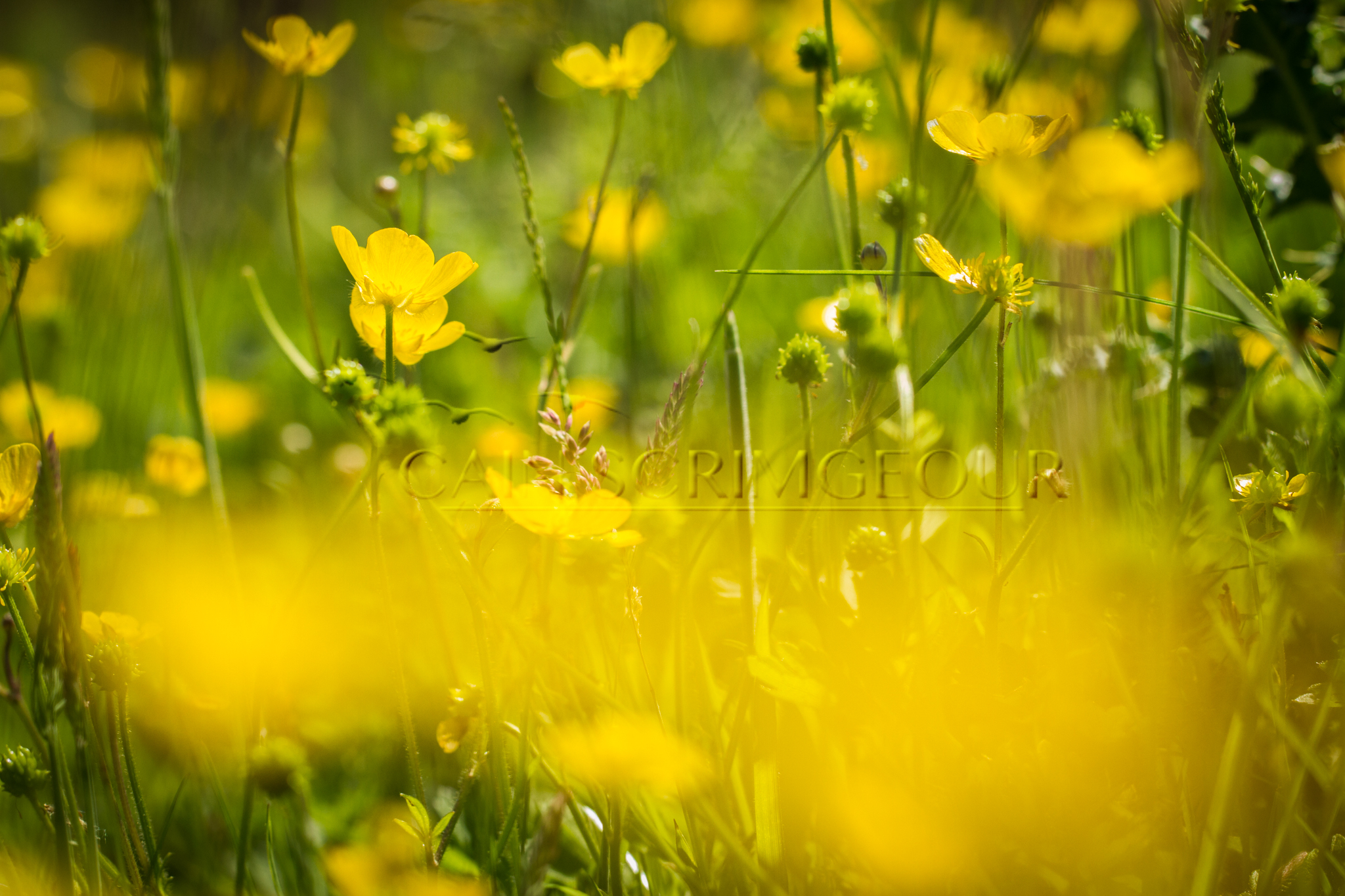
Flowers are everywhere, the meadows are in almost full bloom. I've spent quite of a bit of time loosing myself in meadows over the past couple of years, and I'm pleased to be back in them. At first glance, a few pieces of colour catch your eye, enough to draw you in. Once your in thats it, you can't escape, your mind and senses can't stay still. Where to look? What to smell? Who's buzzing? Where to begin? 

Before you know the surrounding world has been lost, and you've arrived on a completely different planet. You haven't flown here, you haven't took the train or boat, you haven't even driven here, you've simply stepped in, and your mind and perceptions have been opened for you. Thats the beauty of it.

Wild Flowers seem to be abundant this year in the North East, and with new local efforts, you can experience meadow like environments almost everywhere. Some of those road verges are looking stunning!


30 Days of Wild - Day 4 - Citizen Science


Citizen Science has never been so accessible, or so valuable. Our world is beginning to change at a rate we can't keep up with, but citizen science projects are helping to gain vast quantities of data across the board. Last week we began recording some of Mull's plant species, with the National Plant Monitoring Scheme.


Wednesday, 3 June 2015

30 Days of Wild - Day 3 - The Unexpected


I headed down to the Co-op today to buy some dinner, I struggled to find somewhere to park, squeezing into one of the smaller bays. I cross the road and joined the hustle and bustle of the busy high street, bumping shoulders with a man coming out of the shops. The Co-op was chocker, everyone stocking up, shoulder to shoulder in the clearance section. 10 minutes in the que for the tills and I was out, back onto the bustling high street.

In the distant I spotted a distinctive shape, logging on the surface of the water. An Otter! Two steps out of the door of a Co-op, on a bustling high street. This Co-op is on the Isle of Mull, and does outlook onto Tobermory harbour, but it reminded me how important it is to never switch off.


30 Days of Wild - Day 2 - Sunsets


Yesterday was another wet and windy day, as fragments an Atlantic storm passed over the Isle of Mull. We had left in heavy rain, watching Red Breasted Mergansers, Great Northern Divers and White-Tailed Eagles in the breaks of the heaviest down pours.

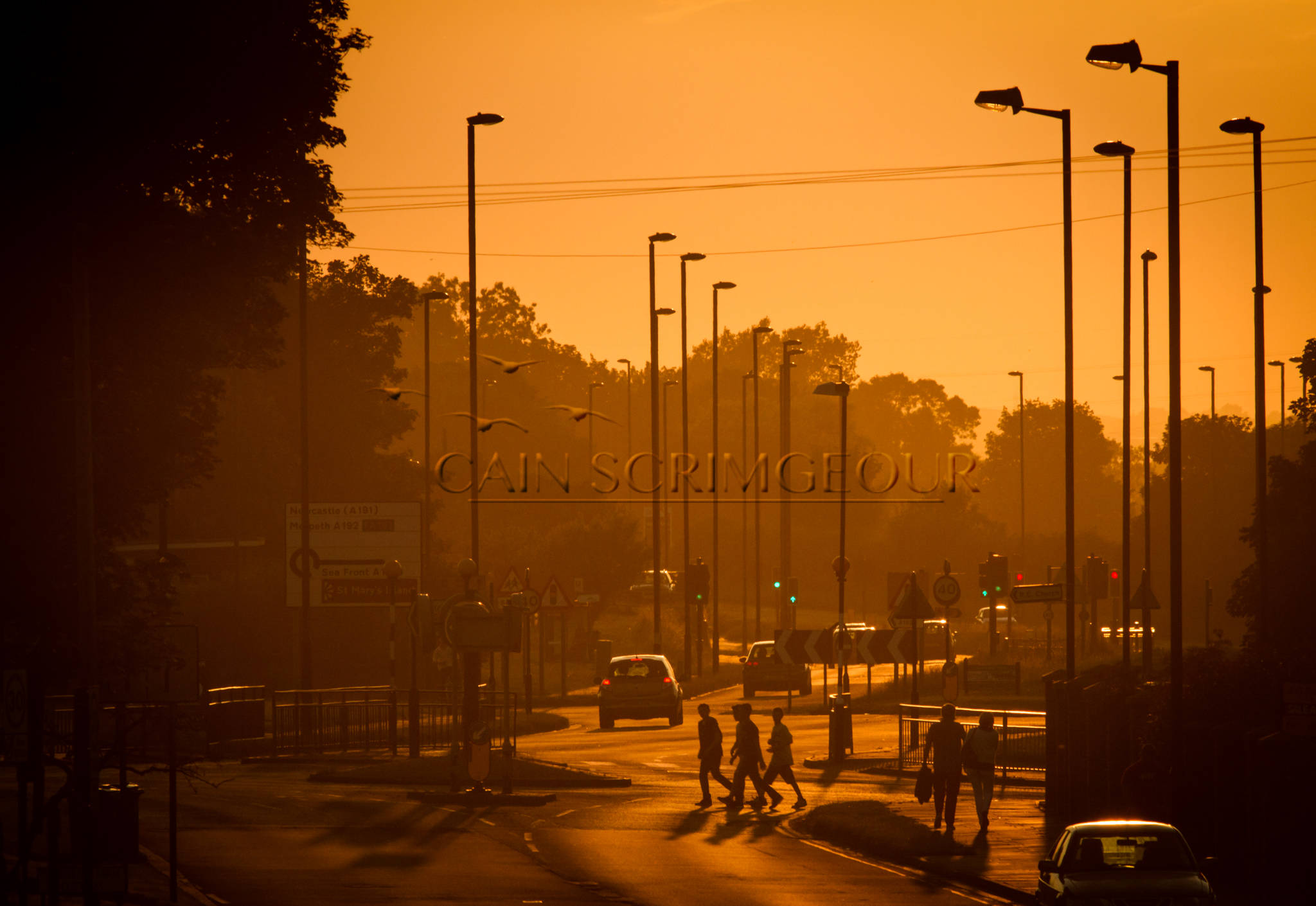
Clouds hung low over Mull's hills, the sky was dark, although light could be seen on the horizon. Steadily the dark clouds passed over head and revealed the setting sun, casting its like across the hills of Ulva, showing the subtle contrasts of the landscapes, and the depth of these Hebridean landscapes.

The setting sun, casting its rays over the island of Ulva.

Monday, 1 June 2015

30 Days of Wild - Day 1 - Spending Time in Storms


Snow and hail fell as I travelled through Glencoe last night, a sense of uncertainty hung in the air, was Spring being halted once again?

Atlantic squalls tore across Mull’s westerly facing sea lochs, amongst these wild weather patterns we feel our place on this earth, a tiny minuscule piece of a grander plan, although still an important part of it. Weather like this has the ability to shed all of kept up cobwebs in one go, and refresh our outlooks.


Wildernesses’ distinctive waterfalls heavy with rains inverted on the horizon.


Monday, 13 April 2015

The Pond

A couple of visits over the last couple of days has brought me a few firsts for the year; two drake Red Crested Pochards stayed for the day on Saturday, accompanied by an Otter in the evening, yesterday a lone Swallow flew low over the water.

Today 2 Chiff Chaff sang from the North Wood, along with a pair of drumming Great Spotted Woodpeckers, on the pond there were 11 Mallard, 6 Canada Geese (one on nest), 6 Pochard, a pair of Teal, 19 Tufted Duck, 4 Little Grebe, 4 Moorhen, a pair of Mute Swan (one on nest), 15 Herring Gull, and 2 Lesser Black Backed Back Gull.

8 Curlew flew in from the North as two Swallows hawked over the pond. A Kestrel hunted to the East, and a Common Buzzard was mobbed by Carrion Crows over the Obelisk.

Reed Bunting, Great Tit, Robin, Song Thrush, Blackbird, Dunnock, and a female Great Spotted Woodpecker were present in the feeding station.

Heading down the Dene, I was pleased to find the Dippers doing well.


Sunday, 29 March 2015

A day in the Pennines...

After a stream of reports coming from the North Pennines, with the presence of a White-Tailed Eagle, myself and Phil decided to head down for a much needed days birding. 

Although we didn't manage to find the WTE, we did have a brilliant few hours in the company of Red Grouse, Lapwing, Redshank, Curlew, Oystercatcher, Skylarks and the showy Great Grey Shrike at Stanhope.

No matter how desolate they are, there's something quite inspiring about the moors in the Spring.


Tuesday, 24 February 2015

Hybrid Aythya

My attention was grabbed by a funny-looking Aythya duck at Holywell last Friday, it had me running back to my car for the scope.


 My heart was racing, but when I got the scope on it, I realised it wasn't the Lesser Scaup I had hoped for. Instead, after a few minutes of grilling its features and comparing it to a variety of sources, I suspected it was a Tufted X Pochard hybrid, which was confirmed by a text from BD (it's been around for a few weeks).


Today I had a brief chance to revisit this stunning hybrid and capture some record shots. 


Saturday, 20 December 2014

Islay Goose Management Strategy

Scottish Natural Heritage have again done themselves proud by announcing this goose management strategy on Islay. Every time I read 'strategies' like this I can only think, when will the human population going to be culled? 

The three aims of the strategy:
- Meet the UK's nature conservation obligations for geese, within the context of wider biodiversity objectives. (That's a great box ticking line)
- Minimise economic losses experienced by farmers and crofters as a result of the presence of geese. (i.e. reducing crop damage by 25-30% by lethally controlling Greenland Barnacle Geese)
- Maximise the value for money of public expenditure. (Money/Greed)

To achieve these aims there are a further list of points, but my favourite line being:
'Maintain a viable population of barnacle geese at a level which meets our conservation obligations.' 

Our conservation obligations, shifting baseline syndrome?

Not far into the report you'll find this gem of a paragraph. 
'The average Greenland barnacle goose population wintering on Islay has risen from c.3,000 in 1952 to a peak of just under 50,000 in 2005-2006 (Figure 1) (Mitchell & Hall, 2013). That long term increase since the 1950s was due to a combination of breeding success, reduction in hunting following legal protection and changes in agricultural management providing good quality winter feeding. However, the numbers have fluctuated over recent years. There was no significant growth in the Islay population between the last two population censuses in 2008 and 2013 and there was a drop of just under 6,000 geese since winter 2012/13. Analysis by WWT suggests that the population trend has have levelled off (Hilton et al. 2014)'

So it seems that Scottish Natural Heritage would prefer to return to a time when numbers were reduced by hunting. On further reading it appears they are thinking about it:

'Possibilities for sporting tourism may be considered during the period of the strategy.')
But its all ok, they've added a silver lining, they're investing in the Greenland White Fronted Geese, aiming to increase the population, minimise disturbance, improve their traditional feeding areas, and provide diversionary feeding.

I understand that in this day and age that its becoming increasingly difficult to live, in terms of money, but the constant bright idea of culling species is ridiculous. 

It's as much their home as it is ours.

You can read the article and find links to the report here: http://birdguides.com/webzine/article.asp?a=4772

Friday, 12 December 2014

Wander in the Woods

I had a little wander in the woods this morning, stunning blue skies, fresh cold winters air and that stunning low sun. Accompanied by a cast of Roe Deer, and a little surprise flash of blue.


Sunday, 7 December 2014

Quick Visit

Quick visit to Holywell this morning. 

On the pond, a pair of Mute Swan, 4 Wigeon, 32 Mallard, 16 Pochard, 19 Tufted, 3 Greylag, Black Headed, Great Black Backed, Herring and Common Gull, 6 Moorhen. 4 Lapwing and 20 Curlew overhead.

A flock of 30+ Yellowhammers is still hanging around by the old dump, and a pair of Kestrels hunted in the dene.


Thursday, 2 October 2014

A Suburban Wilderness

This past Summer I've been working with BBC Inside Out close to home, in an area close to my heart. The place which developed my interest and passion for the Natural World, the place you can say I found myself. My suburban wilderness.
IMG_6663
I've grown up in Whitley Bay, on the edge of the Green Belt, the forefront of housing development. My passion for the natural world developed in areas of land which were left around the housing estates, wastelands as some people call them. I've always seen them as wild, but it wasn't until reading Feral by George Monbiot, that it dawned on me, these areas are wildernesses. After the initial act which creates them, either planting, surface works, or just dereliction, they are by majority, left free to naturally grow and develop.
IMG_3261
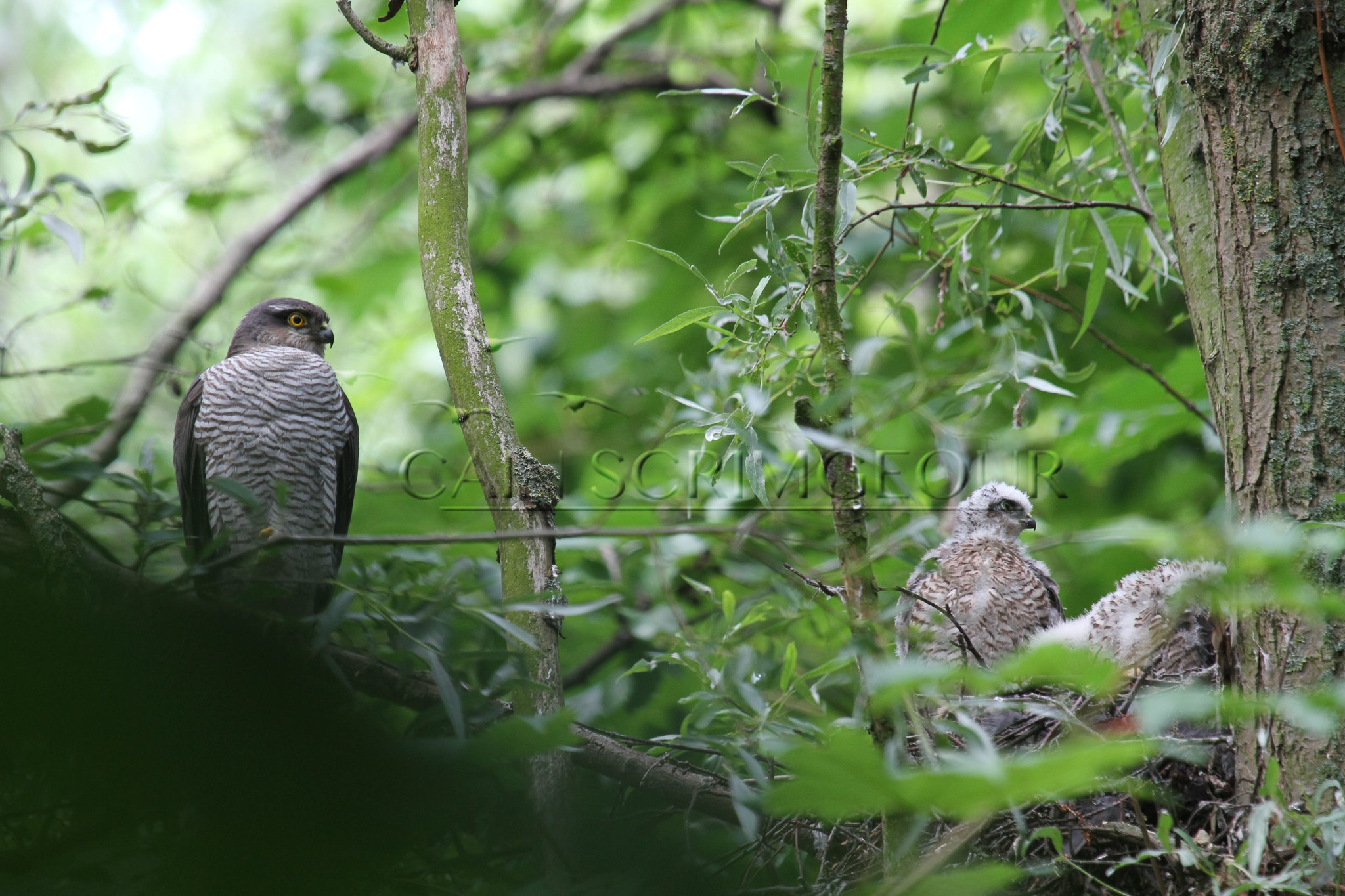
Unfortunately these are seen as wasteland sites, and sites which are said they can't be built on, in the end are. We have two larger areas left, one a mix of concrete bricks, grassland and hawthorns, the other a planted wood and a now stunning meadow. The rest consists of fragment 30-40 year woodland, and 20 year old shelter belts. One of these fragmented woodlands I've been familiar with since a child. Although its size is deceiving this is the wildest place I know, its like stepping into a place that had been forgotten, by man anyway. In the summer the floor is dominated by greenery, sticky weed up to your chest, giving home to the Fox, but also species which are associated with old woodland, such as the Speckled Wood Butterfly. The only pair of Blackcaps in my estate breeds there, and its also home to my most treasured species, the Sparrowhawk, raising its family undisturbed here for as long as I can remember.
Mr
At the beginning of the year a new development began to change my suburban wilderness, an area directly connected, a corridor into the surrounding green belt was steadily removed. Not only effecting the wildlife on them particular fields, but also the wildlife of my patch, the place which had let me grow. I found myself angry.
'Progress I’m told, progression to what, the end?
The Green Belt is a brilliant idea, its unfortunate that it doesn’t live up to its name, it should be called the ‘progression zone’, or more aptly encroachment zone, with every sq metre of green land steadily getting encroached upon, with the blight of an urban lifestyle.
‘Suburban’ estates which are increasingly devoid of green, 3 metre front gardens, gravelled, with big steel fences enclosing them, wider tarmac paths and roads, houses squeezed side by side with just enough space to fit a wheelie bin down. Boxed back gardens with huge fences, like mini fortresses designed to keep everything out out and everything in in. Like the buildings themselves, no holes, no chance of a gap in the eaves, facer boards, or tiles, nowhere for insects to make their homes, never mind, House Sparrows, Starlings, Swifts, and Bats.
At least there’s still some wildlife corridors, the little voice in my head says, unfortunately not, wildlife corridors to what, monoculture crops? Wildlife unfriendly farms? And with 200 houses brings at least two hundred people, more like 800, and where do their gardens back onto? Where do they walk their dogs? The bottleneck that is now the ‘wildlife corridor’, 10 metres wide at the most, cleared of any greenery. The wildlife has nowhere to go but up or down, no escape into the impenetrable fortresses.
So in the end, a fragmented habitat, loosing its possibilities of what ifs, changing behaviours of its resident species, and cutting off those childhood lands. You can only hope that the time its been given has been enough, enough to develop those unique habitats, developed them enough to inspire people to protect them, or the endless goal of progression (greed) continues.
As I watch those dark storm clouds pass over ahead and the brilliant orange sun sets, I know all will be well in the end. It won’t be the end they were expecting, nature will reclaim its lost lands.'
There was nothing I could do to stop the development, but I wasn't going to sit back and watch my suburban wilderness become the next victim of man's 'progression'. Maggie Latham from BBC Inside Out contacted me after reading one of my suburban wilderness blogs, commissioning a short film on the area. I had a platform for my voice. Behind the scenes I began gaining a greater picture of the site, recording all that I found, constructing a report with the data.
The site held:
  • Three Newcastle and North Tyneside BAP Priority mammal species (West European Hedgehog, Otter and Common Pipistrelle); two of which are also UK BAP Priority species.
  • One UK and North Tyneside BAP Priority species of butterfly (Wall).
  • One Newcastle and North Tyneside and UK BAP Priority species of amphibian (Common Toad).
  • Six Newcastle and North Tyneside BAP Priority bird species (Dunnock, House Martin, House Sparrow, Song Thrush, Starling and Swift), plus four UK BAP Priority species (Common Bullfinch, Linnet, Reed Bunting, Tree Sparrow and Yellowhammer).
This report is now with North Tyneside Council, in the hope that the area can be protected, gaining a Local Nature Reserve status, which will hopefully protect the areas wildlife, but also help introduce more people to the area, building a community of people who appreciate its wonders. These areas are vital for children's connection to nature in an urban environment, but also vital for nature itself.
Watch my BBC Inside Out short film below:
Read my feature in the Journal here.

Tuesday, 30 September 2014

Dissipate

Back in March me and my little sister had an idea, an idea to to try something new, turning my imagery into wearable artwork, through the use of dye-sublimation printing.


Since then Honor has developed Dissipate, a brand new and fresh approach to the world of clothing, sharing inspiring moments and adventures, through distinct and abstract artwork.


Honor doesn't want Dissipate just to be another clothing company, she wants to build a community, a community filled with adventures, moments and inspiration. She wants you to share your adventures, your moments and your inspiration, to inspire and to be inspired. By using #dispersefromsociety we can begin to create the dissipate community. 


Dissiapte needs to raise £1800.00 in order to produce the first line of clothing, so we've setup a crowd funding campaign on Kickstarter. Through incentives you can purchase the first t-shirts and hats, helping Honor reach her goal, and chase her dream.


Visit the Kickstarter Campaign here: http://kck.st/1C4fLIl